How to Be a Great HR Manager?
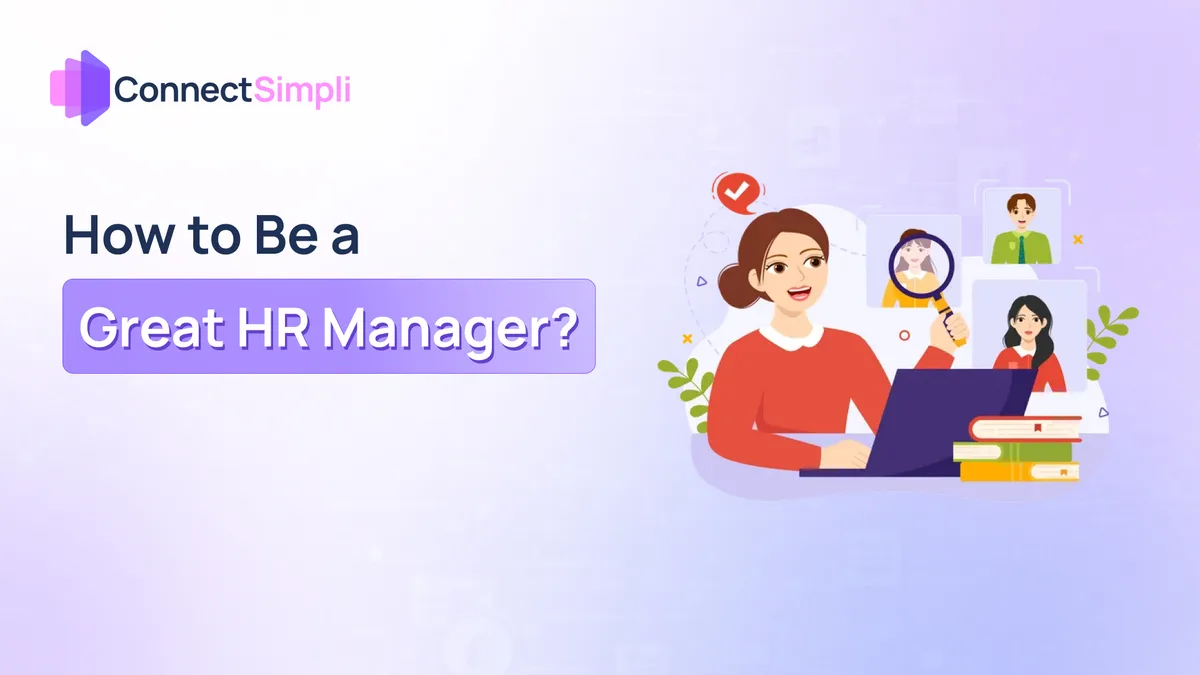
Being an HR manager is about much more than knowing HR policies.
A great HR manager needs to understand people, communicate with different personalities, solve problems, support managers, and help the organisation make better decisions.
That’s why someone can know all the HR processes and still struggle to become an effective HR manager.
So, how do you become a great HR manager?
It starts with building trust.
Employees need to feel comfortable approaching you. Managers need to know they can rely on your advice. And leadership needs to trust your judgement.
In this guide, we’ll look at the skills and habits that can help you become a more effective HR manager.
What Makes a Great HR Manager?
A great HR manager balances the needs of employees with the needs of the organisation.
They don’t automatically take the employee’s side or management’s side.
Instead, they try to understand the situation, consider the available information, follow appropriate processes, and find a fair and practical way forward.
Some of the most important qualities include:
- Strong communication
- Good listening
- Emotional intelligence
- Organisation
- Fairness
- Problem solving
- Leadership
- Confidentiality
- Business understanding
- Adaptability
Let’s look at each one.
1. Become a Great Listener
One of the simplest ways to become a better HR manager is to listen more carefully.
Employees may approach HR because they have:
- A workplace concern
- A disagreement
- A question
- A problem with a process
- A career concern
If you immediately start giving advice without understanding the situation, you may miss important information.
Good listening means allowing people to explain themselves before reaching conclusions.
2. Communicate Clearly
HR managers communicate constantly.
You may need to explain a policy to an employee, discuss staffing with management, interview a candidate, or help resolve a workplace disagreement.
Clear communication reduces confusion.
Try to:
- Avoid unnecessary jargon
- Explain the reason behind decisions
- Ask questions when something isn’t clear
- Confirm important information
- Adapt your communication style to the audience
Good HR communication should be professional but also easy to understand.
3. Be Fair and Consistent
Employees pay attention to how HR handles situations.
If two employees face similar circumstances but receive completely different treatment without a clear reason, employees may lose trust in HR.
Being fair doesn’t necessarily mean treating every situation identically.
Different circumstances may require different responses.
But HR managers should apply policies and processes consistently and be able to explain their decisions.
4. Protect Confidential Information
HR managers often have access to sensitive employee information.
This can include:
- Personal information
- Salary information
- Performance discussions
- Employee complaints
- Employment documents
Employees need to trust HR with this information.
A great HR manager understands when information should remain confidential and only shares information with people who have a legitimate reason to access it.
Using structured permissions can also help. For example, Roles & Access management can help organisations control access to HR information.
5. Learn How to Handle Difficult Conversations
Difficult conversations are part of HR.
You may need to discuss:
- Poor performance
- Workplace behaviour
- Attendance problems
- Employee complaints
- Conflicts
- Organisational changes
Avoiding difficult conversations usually doesn’t make the problem disappear.
Instead, prepare carefully, remain professional, listen to the employee, and focus on facts and the appropriate process.
6. Build Strong Relationships With Managers
HR shouldn’t operate separately from the rest of the organisation.
A great HR manager builds relationships with department managers and understands their challenges.
Managers may need HR support with:
- Hiring
- Team structure
- Performance
- Employee concerns
- Leave and attendance
- Employee development
When managers trust HR, they are more likely to involve HR early rather than waiting until a problem becomes serious.
7. Understand the Business
HR managers work with people, but they also work inside a business.
To become a great HR manager, learn how your organisation makes money, serves customers, operates departments, and measures success.
Understand:
- Business goals
- Major departments
- Revenue drivers
- Operational challenges
- Workforce requirements
This helps HR recommendations become more practical.
For example, rather than simply saying, “We need more employees,” an effective HR manager can explain how additional employees would support a specific business objective.
8. Use Data to Support Decisions
Good HR managers don’t rely only on intuition.
HR data can help identify patterns and support better decisions.
You might review:
- Employee turnover
- Attendance
- Leave
- Recruitment
- Performance
- Workforce numbers
- Employee feedback
For example, if one department has unusually high turnover, HR can investigate why.
Is the workload too high?
Is there a management issue?
Are employees leaving for better opportunities?
Data doesn’t provide every answer, but it can tell you where to look.
9. Keep HR Processes Organised
An HR manager can quickly become overwhelmed if everything is handled manually.
Employee information, documents, leave requests, attendance, performance reviews, and other processes can generate a large amount of administrative work.
Keeping these processes organised allows HR managers to focus on higher-value work.
A central HR software solution in Pakistan can help bring different employee and HR processes into one organised system.
10. Give Employees a Voice
A great HR manager shouldn’t only communicate with employees when there is a problem.
Regular employee feedback can help HR understand what is working and what needs improvement.
You can gather feedback through:
- Employee surveys
- One-to-one conversations
- Team meetings
- Feedback sessions
- Exit interviews
Employee surveys can provide a structured way to understand employee opinions. A dedicated Employee Surveys system can support this process.
11. Help Employees Develop
Employees don’t only want a salary.
Many also want opportunities to learn, develop, and progress.
A great HR manager works with managers and employees to understand development needs.
This might involve:
- Training
- Mentoring
- New responsibilities
- Career discussions
- Performance goals
- Internal opportunities
Development doesn’t have to mean expensive training programmes.
Sometimes giving an employee a new responsibility or connecting them with an experienced colleague can be valuable.
12. Make Performance Management Useful
Performance management shouldn’t be something employees only hear about once a year.
Great HR managers help create a process where employees understand:
- What is expected of them
- What they are doing well
- Where they can improve
- What goals they should work toward
Regular feedback can make performance management more useful.
A structured Performance Reviews process can help organisations create consistency around employee performance discussions.
13. Don’t Try to Solve Everything Yourself
HR managers sometimes feel that they need to have an answer for every problem.
You don’t.
A great HR manager knows when to:
- Ask for more information
- Speak with management
- Consult another HR professional
- Review company policies
- Seek specialist advice
- Take time before making a decision
Knowing when to ask for help is a strength, not a weakness.
14. Stay Calm Under Pressure
HR can become stressful.
You may have multiple employee concerns, urgent recruitment needs, management requests, and administrative deadlines happening at the same time.
A great HR manager learns to prioritise.
Ask:
What needs immediate attention?
What can wait?
What has the biggest impact on employees or the business?
Staying calm helps you make better decisions.
15. Keep Learning
HR doesn’t stay the same.
Workplaces, technology, employee expectations, and business practices continue to change.
Great HR managers continue learning through:
- Professional development
- HR communities
- Courses
- Industry resources
- Networking
- Practical experience
- Learning from other HR professionals
You don’t need to know everything.
You simply need to keep improving.
How Can HR Technology Make You a Better Manager?
Technology can’t replace good HR judgement, but it can reduce repetitive administrative work.
Instead of spending hours searching through spreadsheets and documents, HR managers can use technology to organise information and automate parts of their workflows.
For example, HR software can help manage:
- Employee information
- Attendance
- Leave
- Payroll processes
- Performance
- Documents
- Reports
A mobile-enabled HR system can also give employees and managers easier access to relevant HR processes while they’re away from their desks.
The result is simple:
Less time spent chasing information and more time spent working with people.
Mistakes Great HR Managers Try to Avoid
Even experienced HR managers can make mistakes.
Some common ones include:
Acting Before Listening
Don’t make decisions before understanding the situation.
Treating Every Situation the Same
Fairness doesn’t always mean identical treatment.
Becoming Too Close to Employees
HR managers should build good relationships while maintaining professional boundaries.
Ignoring Managers
HR needs to work with managers rather than operating separately from them.
Focusing Only on Administration
HR is more than paperwork.
Avoiding Difficult Conversations
Problems often become harder when they aren’t addressed early.
Relying Only on Instinct
Use facts and data where possible.
A Simple Daily Routine for a Better HR Manager
You don’t need a complicated routine.
A simple structure can help.
Start the Day
Review urgent employee requests, HR tasks, and important deadlines.
Prioritise
Identify the issues that require immediate attention.
Connect With People
Speak with employees and managers instead of spending the entire day behind a computer.
Review Progress
Check important HR processes and outstanding tasks.
Learn Something
Spend a small amount of time each day or week learning something new about HR, business, or leadership.
Reflect
At the end of the day, ask:
What went well today?
What could I have handled better?
That habit alone can help you improve over time.
What Is the Most Important Quality of a Great HR Manager?
There isn’t one quality that makes someone a great HR manager.
But trust is at the centre of many successful HR relationships.
Employees need to trust HR.
Managers need to trust HR.
Leadership needs to trust HR.
Trust is built through consistency, honesty, confidentiality, good communication, and fair decision-making.
It doesn’t happen overnight.
It’s built through hundreds of small interactions.
Final Thoughts
So, how do you become a great HR manager?
Start by focusing on people while understanding the needs of the business.
Listen carefully. Communicate clearly. Be fair. Protect confidential information. Build relationships with managers. Use data to support decisions. Keep learning and don’t be afraid to ask for help.
And remember that being a great HR manager isn’t about having an answer for everything.
It’s about being someone employees and managers can trust when they need guidance.
The best HR managers don’t simply manage HR processes.
They help create a workplace where people and the business can grow together.
FAQs About Being a Great HR Manager
How can I become a great HR manager?
Develop strong communication, listening, leadership, problem-solving, organisational, and people-management skills while learning how the business operates.
What are the qualities of a good HR manager?
Important qualities include fairness, empathy, communication, confidentiality, organisation, emotional intelligence, adaptability, and sound judgement.
What is the most important skill for an HR manager?
Communication and listening are among the most important skills because HR managers regularly work with employees, managers, and leadership.
Should an HR manager understand the business?
Yes. Understanding business goals and operations helps HR managers provide more practical and valuable recommendations.
How can technology help HR managers?
HR technology can organise employee information and streamline processes such as attendance, leave, performance, payroll, documents, and reporting.
How can an HR manager build employee trust?
By listening to employees, protecting confidential information, communicating honestly, applying processes fairly, and following through on commitments.