What Does an HR Consultant Do?
Not every business has a large internal HR department.
A growing company may have employees but only one HR professional, or sometimes no dedicated HR team at all.
That’s where an HR consultant can help.
So, what does an HR consultant do?
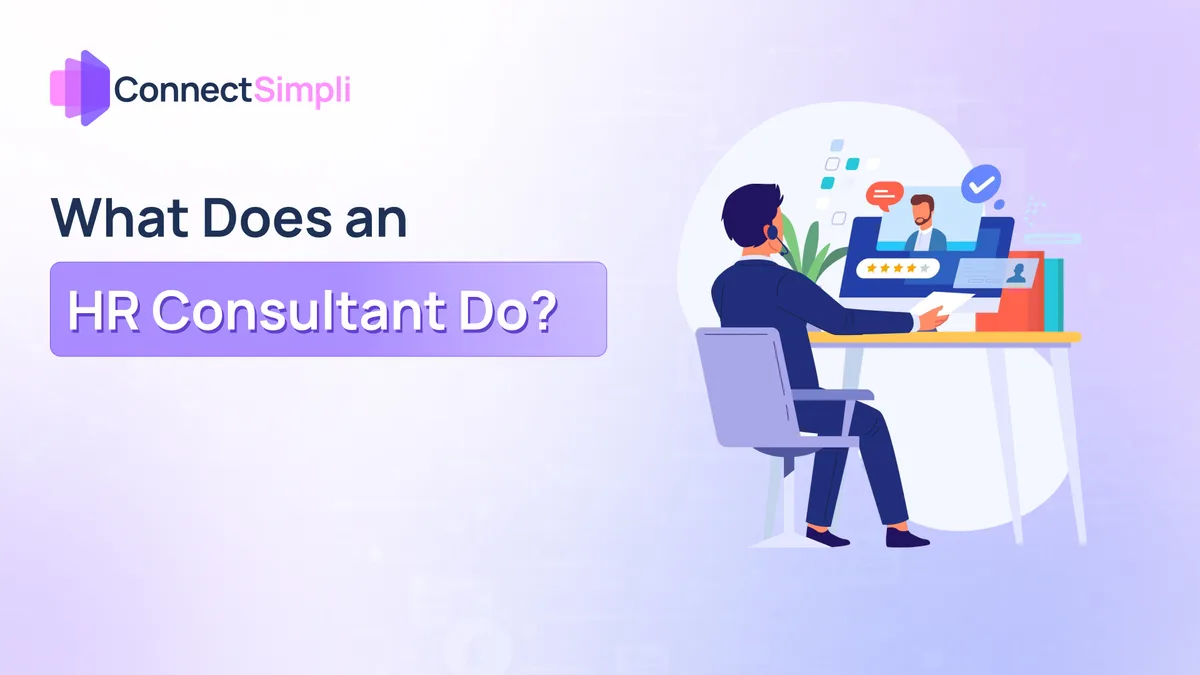
An HR consultant provides professional advice and support to businesses on human resources and people-related matters.
Depending on the client’s needs, an HR consultant may help with recruitment, HR policies, employee processes, performance management, organisational structure, employee relations, or broader HR strategy.
Some consultants work on specific projects, while others provide ongoing HR support.
What Is an HR Consultant?
An HR consultant is an HR professional who provides expertise to organisations from outside the company’s internal HR team.
Instead of being a permanent employee, the consultant typically works with a business on a project, contract, or advisory basis.
For example, a company might hire an HR consultant to:
- Build HR policies
- Improve HR processes
- Help with recruitment
- Review employee records
- Improve performance management
- Support organisational changes
- Advise management
The consultant’s role depends heavily on what the business needs.
What Does an HR Consultant Do?
HR consultants can work across many areas of human resources.
Let’s look at some of the most common responsibilities.
1. Reviewing Existing HR Processes
One of the first things an HR consultant may do is understand how the organisation currently manages its employees.
They may review processes such as:
- Recruitment
- Onboarding
- Attendance
- Leave
- Employee records
- Performance management
- HR policies
The goal is to identify what is working and where improvements may be needed.
For example, an HR consultant might discover that a company is managing employee information through several disconnected spreadsheets.
They can then recommend a more organised approach.
2. Developing HR Policies
Businesses need clear HR policies so employees and managers understand workplace expectations.
An HR consultant may help create or improve policies related to:
- Attendance
- Leave
- Workplace behaviour
- Employee conduct
- Performance
- Recruitment
- Employee responsibilities
The consultant may review existing policies, identify gaps, and help the business create clearer processes.
3. Helping With Recruitment
Some businesses hire HR consultants to support recruitment.
A consultant may help with:
- Defining job requirements
- Writing job descriptions
- Creating recruitment processes
- Screening candidates
- Interview processes
- Hiring procedures
This can be particularly useful for smaller businesses that don’t have a dedicated recruitment team.
4. Improving Employee Onboarding
HR consultants may also review how new employees are introduced to the organisation.
They might identify problems such as:
- Inconsistent onboarding
- Missing documentation
- Unclear responsibilities
- Lack of communication
- No structured onboarding timeline
The consultant can then help create a more consistent process.
A structured Employee Onboarding system can support businesses in organising these processes.
5. Advising on Employee Relations
Employee relations can become complicated.
Businesses may need help dealing with workplace concerns, communication problems, conflicts, or employee complaints.
An HR consultant can provide an independent perspective and help management understand the situation and consider appropriate HR processes.
The consultant doesn’t necessarily make the final decision.
Instead, they provide expertise to help the business make a more informed decision.
6. Supporting Performance Management
An HR consultant may help businesses create better performance management processes.
This can include:
- Performance review frameworks
- Employee goals
- Feedback processes
- Manager guidance
- Performance documentation
For example, a consultant might find that managers are conducting performance reviews inconsistently.
They could then help the business create a standard process.
A structured Performance Reviews system can support this type of standardised approach.
7. Reviewing Employee Records
Accurate employee information is essential for effective HR management.
An HR consultant may review whether employee records are:
- Complete
- Accurate
- Up to date
- Properly organised
- Accessible to authorised people
They may recommend centralising employee information using a Core HR system.
This can be particularly useful when a business has grown quickly and its HR records have become difficult to manage.
8. Helping With HR Technology
An HR consultant may also advise businesses on how technology can improve their HR processes.
For example, a business may be managing:
- Employee records in spreadsheets
- Leave through email
- Attendance manually
- Payroll separately
- Documents across different folders
A consultant can review these processes and recommend ways to centralise or automate them.
The goal isn’t simply to introduce software.
The technology should solve an actual business problem.
9. Supporting Organisational Changes
Businesses sometimes go through major changes.
For example:
- Rapid growth
- Restructuring
- New departments
- Mergers
- Leadership changes
- Expansion into new locations
HR consultants can help management think through the people-related side of these changes.
This might include reviewing roles, reporting structures, responsibilities, or workforce requirements.
10. Providing HR Advice to Management
One of the biggest benefits of an HR consultant is access to HR expertise.
Business owners and managers may understand their industry extremely well but may not have deep HR knowledge.
An HR consultant can provide guidance on people-related decisions and help management understand the HR implications of different approaches.
What Is the Difference Between an HR Manager and an HR Consultant?
The two roles can overlap, but they are different.
HR Manager
An HR manager is normally an internal employee of the organisation.
They may manage the company’s ongoing HR operations and sometimes lead an HR team.
HR Consultant
An HR consultant typically works from outside the organisation.
They are brought in to provide specialist advice, support specific projects, or provide temporary HR expertise.
For example:
HR Manager: Manages HR continuously from inside the business.
HR Consultant: Provides external expertise when the business needs it.
When Should a Business Hire an HR Consultant?
There isn’t one specific situation where every company needs an HR consultant.
However, businesses may consider one when they:
- Are growing quickly
- Don’t have a dedicated HR team
- Need help creating HR policies
- Are restructuring
- Need an independent HR perspective
- Want to improve HR processes
- Need temporary HR expertise
- Are introducing new HR systems
A consultant can be particularly useful when a company has reached a point where informal HR processes are no longer enough.
What Skills Does an HR Consultant Need?
A successful HR consultant needs both HR expertise and strong business skills.
HR Knowledge
They need to understand key HR functions and processes.
Communication
Consultants need to explain complex HR matters in a way that business owners and managers can understand.
Problem Solving
Every client can have different challenges, so consultants need to adapt their approach.
Analytical Thinking
HR consultants often review data, processes, and documents before making recommendations.
Business Understanding
The consultant needs to understand that HR recommendations should support the organisation’s broader goals.
Confidentiality
Consultants may have access to sensitive employee and business information.
Professional handling of confidential information is essential.
How Does an HR Consultant Work With a Business?
The process usually begins by understanding the client’s needs.
Step 1: Understand the Problem
The consultant talks to management and learns about the current situation.
Step 2: Review Existing Processes
They examine relevant HR information, policies, and processes.
Step 3: Identify Gaps
The consultant identifies areas that could be improved.
Step 4: Recommend Solutions
They provide practical recommendations based on the company’s needs.
Step 5: Support Implementation
Depending on the agreement, the consultant may also help the business implement the recommendations.
How Much Does an HR Consultant Cost?
HR consultant fees can vary significantly.
Pricing may depend on:
- Consultant experience
- Project complexity
- Business size
- Location
- Duration of the engagement
- Type of HR service required
Some consultants charge hourly rates.
Others use daily rates, fixed project fees, or monthly retainers.
Businesses should focus on the value and scope of the service rather than simply choosing the cheapest option.
Can an HR Consultant Work With Small Businesses?
Yes.
In fact, smaller businesses can benefit from HR consulting because they may not have the resources to employ a full-time HR team.
An HR consultant can provide expertise when needed without requiring the company to build a large internal HR department.
For example, a small business might hire a consultant to create its HR policies and improve its employee processes, then manage those processes internally afterward.
HR Consultant and HR Software
HR consultants and HR software can complement each other.
A consultant can help a business determine what needs to improve and how the process should work.
HR software can then help the business manage those processes more consistently.
For example, a business may work with a consultant to redesign its employee management process and then use HR software in Pakistan to centralise employee information and HR operations.
Technology can make the consultant’s recommendations easier to implement and maintain.
What Are the Benefits of Hiring an HR Consultant?
An HR consultant can provide several benefits.
External Expertise
Businesses can access professional HR knowledge without hiring a permanent specialist.
Fresh Perspective
An external consultant can sometimes identify issues that internal teams have become accustomed to.
Flexible Support
Businesses can hire consultants for specific projects or periods.
Process Improvement
Consultants can help identify inefficient HR processes and suggest better approaches.
Support During Growth
As companies grow, consultants can help establish HR processes that are more suitable for a larger workforce.
Final Thoughts
So, what does an HR consultant do?
An HR consultant provides external HR expertise to help businesses solve people-related challenges and improve their HR processes.
Their work can involve recruitment, HR policies, employee onboarding, employee relations, performance management, employee records, HR technology, and organisational changes.
The exact role depends on the client’s needs.
For a small business, an HR consultant might act as an outsourced HR expert.
For a larger company, they might be brought in for a specific project or to provide specialist advice.
Ultimately, an HR consultant helps businesses make better decisions about their people and build more organised HR processes.
FAQs About HR Consultants
What does an HR consultant do?
An HR consultant provides professional HR advice and support to businesses. They may help with recruitment, policies, employee relations, performance, HR processes, and organisational changes.
What is the difference between an HR manager and an HR consultant?
An HR manager usually works inside an organisation and manages ongoing HR operations, while an HR consultant typically provides external HR expertise on a project or advisory basis.
When should a business hire an HR consultant?
A business may hire an HR consultant when it is growing, restructuring, creating HR policies, improving HR processes, or needs specialist HR expertise.
Can small businesses hire HR consultants?
Yes. HR consultants can be particularly useful for small businesses that need professional HR support but don’t need or cannot afford a full-time HR department.
What skills does an HR consultant need?
Important skills include HR knowledge, communication, problem solving, analytical thinking, business understanding, organisation, and confidentiality.
Can an HR consultant recommend HR software?
Yes. An HR consultant may recommend technology when it can help solve specific HR process or administrative problems.