What Is an HR Audit?
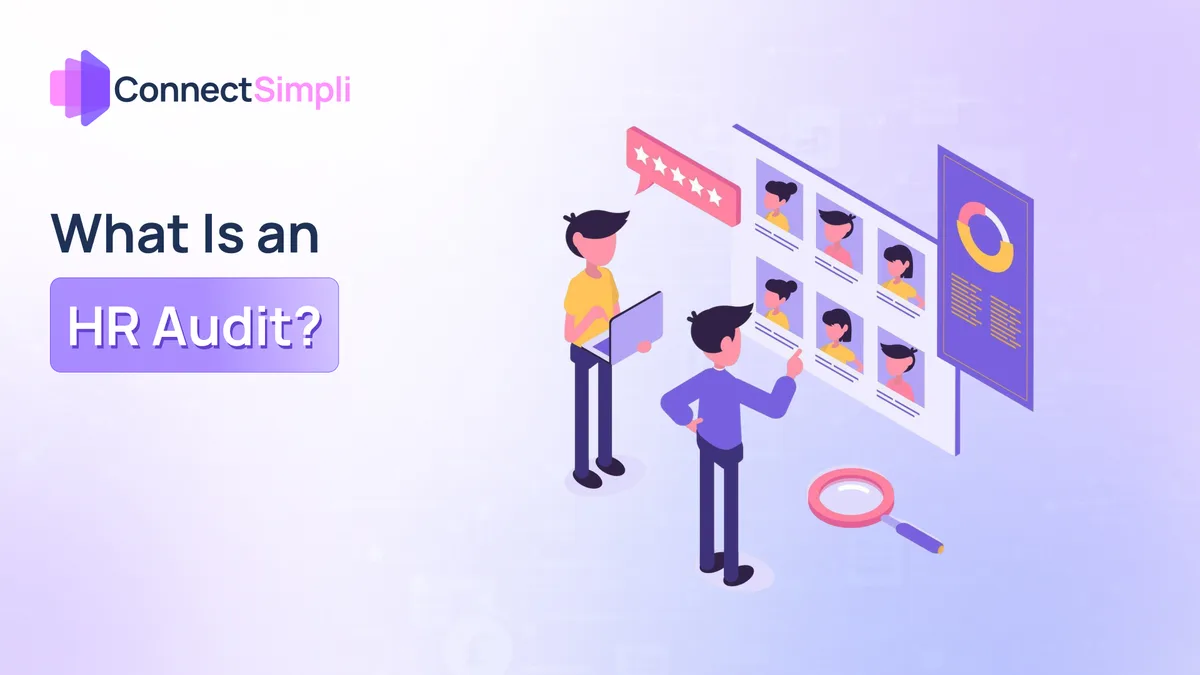
An HR audit is a systematic review of a company’s human resources policies, processes, records, and practices.
It helps a business understand whether its HR processes are organised, effective, consistent, and aligned with its internal policies and applicable requirements.
Think of an HR audit as a health check for your HR department.
Instead of looking at financial accounts or business sales, an HR audit looks at how the organisation manages its people.
An HR audit may review everything from employee records and recruitment processes to attendance, leave, payroll, performance management, and HR policies.
But an HR audit doesn’t necessarily mean that something is wrong.
Businesses can conduct HR audits simply to identify gaps, improve processes, reduce risks, and prepare for future growth.
What Does an HR Audit Mean?
An HR audit is a detailed examination of an organisation’s human resources practices and documentation.
The purpose is to compare what the company is currently doing with what it should be doing according to its own policies, processes, contracts, and applicable employment requirements.
For example, an HR audit may ask:
- Are employee records complete and accurate?
- Are HR policies documented?
- Are employees following the required processes?
- Are attendance and leave records properly maintained?
- Is the onboarding process consistent?
- Are performance reviews being completed?
- Are payroll-related records accurate?
- Are employee documents properly organised?
The exact scope depends on the organisation and the reason for conducting the audit.
Why Do Businesses Conduct HR Audits?
There are several reasons a company might conduct an HR audit.
1. To Find Gaps in HR Processes
Businesses often develop their HR processes gradually.
A company might start with a few employees and manage everything through spreadsheets and email.
As the company grows, those same processes may become difficult to maintain.
An HR audit can reveal areas where processes need improvement.
2. To Improve Employee Records
Employee information is one of the most important parts of HR administration.
An audit can help identify:
- Missing employee information
- Outdated records
- Incomplete documentation
- Inconsistent employee data
A centralised Core HR system can make it easier for businesses to maintain employee information in one organised place.
3. To Review HR Policies
An HR audit can examine whether workplace policies are properly documented, communicated, and maintained.
Businesses may review policies covering:
- Attendance
- Leave
- Employee conduct
- Workplace procedures
- Performance
- Employee responsibilities
The goal is to identify outdated, unclear, or missing policies.
4. To Improve HR Efficiency
An audit can also reveal processes that take too much time.
For example, an HR team might discover that employees are submitting leave requests through email, attendance is being maintained in spreadsheets, and employee documents are stored across multiple folders.
These processes may work for a small company but become inefficient as the organisation grows.
An audit can help HR identify where automation or better systems could reduce unnecessary administrative work.
What Does an HR Audit Cover?
There isn’t one universal HR audit checklist.
The areas reviewed depend on the business.
However, a typical HR audit may examine the following areas.
Employee Records
The audit may check whether employee records are:
- Complete
- Accurate
- Up to date
- Properly organised
- Accessible to authorised people
This is particularly important when employee information is stored across different spreadsheets and systems.
Recruitment and Hiring
An HR audit may examine the recruitment process from job creation to hiring.
Questions may include:
- Are job descriptions clearly defined?
- Is there a consistent recruitment process?
- Are candidate records maintained?
- Are hiring decisions properly documented?
The goal is to understand whether recruitment is structured and consistent.
Employee Onboarding
An audit may also review how new employees are introduced to the company.
For example:
- Are offer letters properly maintained?
- Are required documents collected?
- Are onboarding tasks clearly assigned?
- Are new employees given the information they need?
A structured Employee Onboarding system can help standardise this process.
Attendance and Working Hours
Attendance is another area that may be included in an HR audit.
The business may review:
- Attendance records
- Working hours
- Overtime
- Absences
- Work schedules
Accurate attendance records are particularly important when they are connected to payroll.
A Time and Attendance system can help businesses keep attendance information more organised.
Leave Management
An HR audit may review how employee leave is requested, approved, recorded, and tracked.
The audit could look at:
- Leave policies
- Leave balances
- Approval processes
- Leave records
- Employee access to leave information
A structured Leave Management system can help make these processes easier to monitor.
Payroll Processes
Payroll can also be part of an HR audit.
The review may examine whether:
- Employee salary information is accurate
- Allowances are correctly recorded
- Deductions are properly maintained
- Payroll records are organised
- Payslips contain appropriate information
Payroll may be managed by HR, finance, or both depending on the organisation.
A dedicated payroll software solution in Pakistan can help businesses organise salary-related information and reduce manual payroll administration.
Performance Management
An HR audit may examine whether employees are receiving regular performance reviews and whether the organisation has a consistent process.
The business may review:
- Performance review schedules
- Goals
- Evaluation criteria
- Manager feedback
- Employee development discussions
A structured Performance Reviews system can help businesses create a more consistent review process.
How Does an HR Audit Work?
The HR audit process can vary, but it generally follows a few straightforward steps.
Step 1: Define the Scope
First, the business decides what the audit will cover.
For example, a company might conduct an audit specifically around employee records.
Another business might review its entire HR operation.
Step 2: Gather HR Information
The next step is collecting relevant information.
This could include:
- HR policies
- Employee records
- Employment documents
- Attendance information
- Leave records
- Payroll records
- Performance records
Step 3: Review Current Processes
The auditor or HR team then examines how HR processes actually work.
This is important because written policies and real-world practices may not always match.
For example, a company may have a documented onboarding procedure but employees may not actually be following every step.
Step 4: Identify Gaps
The audit team identifies areas where improvements may be needed.
These could include:
- Missing documentation
- Outdated policies
- Inconsistent processes
- Manual procedures
- Data gaps
- Process bottlenecks
Step 5: Prioritise Improvements
Not every issue needs to be fixed immediately.
Businesses can prioritise findings based on factors such as:
- Importance
- Business impact
- Risk
- Cost
- Time required
This creates a more practical improvement plan.
Step 6: Implement Changes
The final step is taking action.
Depending on the findings, a business might:
- Update HR policies
- Improve employee records
- Standardise onboarding
- Introduce better attendance tracking
- Improve payroll processes
- Automate repetitive HR tasks
HR Audit Checklist
A simple HR audit checklist can include:
Employee Information
- Employee records are complete
- Employee details are updated
- Important documents are organised
- Access to sensitive information is controlled
Recruitment
- Job descriptions are maintained
- Hiring processes are documented
- Recruitment records are organised
Onboarding
- New employee documentation is collected
- Onboarding tasks are defined
- New employees receive relevant information
Attendance and Leave
- Attendance records are maintained
- Work schedules are defined
- Leave requests are properly recorded
- Leave balances are accurate
Payroll
- Salary information is accurate
- Allowances are recorded
- Deductions are recorded
- Payroll records are maintained
Performance
- Performance reviews are scheduled
- Goals are clearly defined
- Managers provide feedback
- Development opportunities are identified
Policies
- HR policies are documented
- Policies are reviewed regularly
- Employees can access relevant policies
What Are the Benefits of an HR Audit?
An HR audit can provide several benefits.
Better HR Organisation
It helps businesses understand how their HR processes are currently working.
Fewer Administrative Errors
Reviewing employee information and processes can uncover mistakes before they become bigger problems.
Improved Employee Experience
Clearer processes can make it easier for employees to understand things like leave, onboarding, policies, and performance reviews.
Better HR Decision-Making
A clear understanding of HR processes gives managers better information for making workforce decisions.
Greater Process Consistency
An audit can identify situations where different departments or managers are following different procedures.
How Often Should a Business Conduct an HR Audit?
There is no single schedule that works for every business.
Some organisations may conduct a comprehensive HR audit annually.
Others may perform smaller reviews throughout the year.
The right approach depends on:
- Company size
- Workforce complexity
- Industry
- Internal HR processes
- Organisational changes
Businesses experiencing rapid growth may benefit from reviewing their HR processes more frequently.
Can HR Software Help With an HR Audit?
Yes.
HR software doesn’t replace an HR audit, but it can make many parts of the process easier.
Centralised HR systems can make employee information, attendance, leave, payroll and performance records easier to organise and review.
For example, ConnectSimpli provides a central HR software platform for businesses in Pakistan that brings together different workforce processes.
This can give HR teams better visibility and reduce their dependence on disconnected spreadsheets and manual records.
Final Thoughts
So, what is an HR audit?
An HR audit is essentially a health check for an organisation’s HR processes.
It helps businesses identify what is working, find gaps, improve inefficient processes, and create a more organised approach to managing employees.
An HR audit doesn’t have to be complicated.
Even a simple review of employee records, policies, onboarding, attendance, leave, payroll, and performance processes can reveal useful opportunities for improvement.
The important part is not simply finding problems.
It’s using the findings to build better HR processes.
FAQs About HR Audits
What is an HR audit?
An HR audit is a systematic review of an organisation’s HR policies, processes, records, and practices.
Why is an HR audit important?
It helps businesses identify gaps, improve HR processes, organise employee information, and find opportunities to reduce administrative problems.
What does an HR audit include?
It may include employee records, recruitment, onboarding, attendance, leave, payroll, performance management, policies, and other HR processes.
How often should HR audits be conducted?
Many businesses conduct a comprehensive HR audit annually, but the ideal frequency depends on the organisation.
Who conducts an HR audit?
An HR audit may be conducted by an internal HR team, HR manager, external HR consultant, or specialist auditor depending on its scope.