What Is HR Planning?
A business can have a great product, strong finances, and good technology, but it still needs the right people to succeed.
That’s why businesses need to think ahead about their workforce.
So, what is HR planning?
HR planning, also called human resource planning, is the process of determining how many employees an organisation needs, what skills they need, and how the business can make sure the right people are available at the right time.
In simple words, HR planning helps a business answer questions like:
How many employees do we need?
What skills will we need in the future?
Do we already have the right people?
Where are our workforce gaps?
How can we prepare for future hiring needs?
Instead of waiting until a position becomes urgently vacant, HR planning allows businesses to think ahead.
What Does HR Planning Mean?
HR planning is about connecting an organisation’s business goals with its workforce needs.
For example, imagine a company plans to open three new branches next year.
The business will probably need additional employees.
HR planning helps determine:
- How many people are required
- Which departments need employees
- What skills are needed
- When employees should be hired
- Whether existing employees can fill some positions
- What training may be required
This makes workforce decisions more organised and less reactive.
Why Is HR Planning Important?
Without proper planning, businesses can face workforce problems.
They may have too few employees, too many employees, or employees without the skills needed for future business requirements.
HR planning helps organisations prepare for these situations.
Some of its major benefits include:
- Better workforce decisions
- More organised recruitment
- Improved resource allocation
- Reduced staffing gaps
- Better succession planning
- Improved employee development
- Support for business growth
Good HR planning isn’t about predicting the future perfectly.
It’s about being prepared for different possibilities.
What Are the Main Objectives of HR Planning?
HR planning usually has several important objectives.
Having the Right Number of Employees
A business needs enough employees to handle its workload.
Too few employees can lead to pressure and delays, while too many can increase unnecessary costs.
Having the Right Skills
Headcount isn’t everything.
A company may have enough employees but still lack people with the right skills.
HR planning considers both the number of employees and their capabilities.
Preparing for Future Needs
Businesses change over time.
New technology, expansion, restructuring, and changing customer needs can all affect workforce requirements.
HR planning helps businesses prepare for those changes.
Supporting Business Goals
HR planning should connect with the organisation’s broader business strategy.
If the company wants to expand, HR needs to understand what that expansion means for its workforce.
What Is the HR Planning Process?
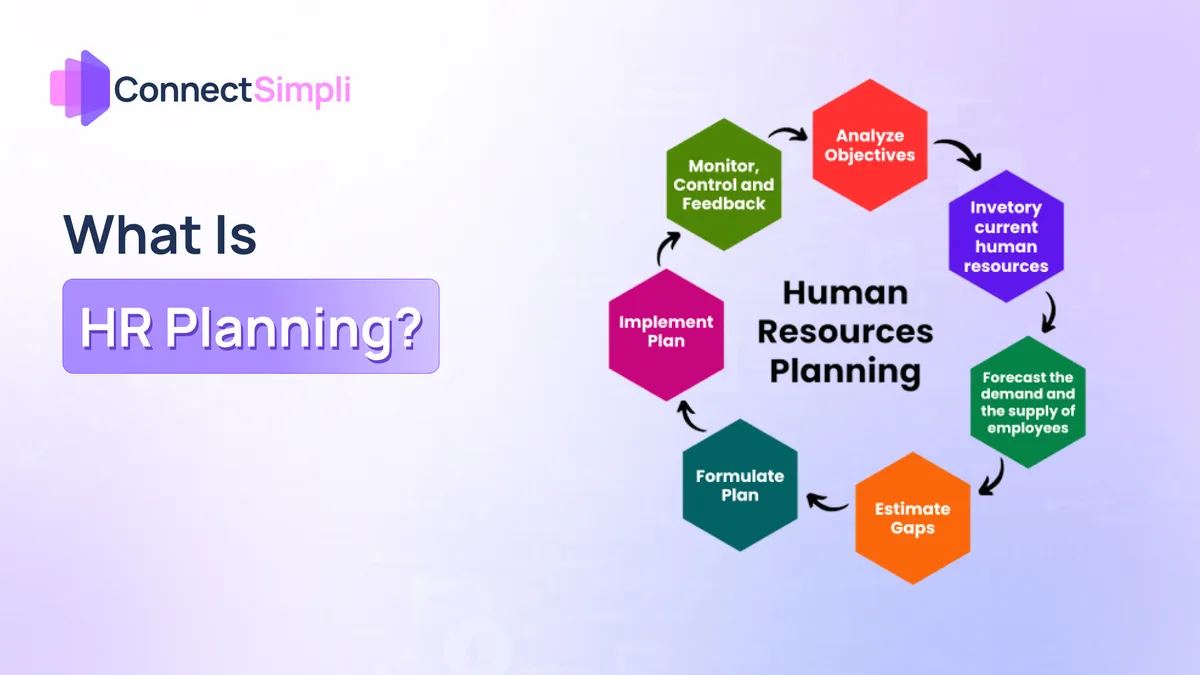
The exact process can differ between organisations, but HR planning generally involves several key steps.
1. Understand Business Goals
The first step is understanding where the business is going.
For example:
- Is the company expanding?
- Are new products being launched?
- Are new locations opening?
- Is the business introducing new technology?
- Are certain departments changing?
HR needs to understand these plans before determining workforce requirements.
2. Analyse the Current Workforce
Next, HR needs to understand the people the company already has.
This can include reviewing:
- Number of employees
- Departments
- Job titles
- Skills
- Experience
- Employee turnover
- Retirement or expected departures
- Current vacancies
An organised Core HR system can help businesses maintain centralised employee information that can support workforce planning.
3. Forecast Future Workforce Needs
The next step is estimating what the organisation will need in the future.
For example, a company expecting significant growth may need:
- More sales employees
- Additional managers
- More customer support staff
- New technical specialists
HR can work with department managers to estimate these future requirements.
4. Identify Workforce Gaps
Once HR knows what the business currently has and what it expects to need, it can identify the gaps.
For example:
Current workforce: 20 sales employees
Future requirement: 30 sales employees
Potential gap: 10 employees
The gap doesn’t always have to be filled through external hiring.
The business could also use:
- Internal promotions
- Training
- Employee transfers
- Restructuring
- Succession planning
5. Create an Action Plan
After identifying the gaps, HR can create a workforce plan.
The plan might include:
- Recruitment
- Training
- Internal mobility
- Promotions
- Succession planning
- Role changes
- Workforce restructuring
This turns workforce analysis into practical action.
6. Monitor and Adjust the Plan
HR planning isn’t something a company should do once and forget.
Business conditions can change.
A company may grow faster than expected, lose key employees, change its strategy, or introduce new technology.
HR should therefore review workforce plans regularly and adjust them when necessary.
What Are the Types of HR Planning?
HR planning can cover different timeframes and areas.
Short-Term HR Planning
Short-term planning focuses on immediate workforce needs.
For example:
- Hiring for current vacancies
- Covering employee absences
- Managing seasonal demand
Long-Term HR Planning
Long-term planning looks further ahead.
It may involve:
- Future leadership needs
- Business expansion
- New skills
- Succession planning
- Workforce transformation
Strategic HR Planning
Strategic HR planning connects workforce decisions with the company’s long-term business strategy.
For example, if a business wants to become more technology-focused, HR may need to plan for employees with new technical skills.
HR Planning Example
Let’s look at a simple example.
Imagine a growing Pakistani retail company plans to open five new stores.
The company currently has:
- 5 store managers
- 30 sales employees
- 10 support employees
The expansion may require:
- 5 additional store managers
- 30 additional sales employees
- Additional support staff
HR can begin planning recruitment months before the new stores open.
It may also identify existing employees who could be promoted into management positions.
This is HR planning in practice.
What Is the Difference Between HR Planning and Workforce Planning?
The terms are often used interchangeably.
Both involve understanding workforce requirements and preparing for future employee needs.
However, workforce planning is sometimes used more broadly to describe the organisation’s overall approach to ensuring it has the right workforce.
HR planning may focus more specifically on human resource activities such as recruitment, development, employee movement, and staffing.
The terminology can vary between organisations.
How Does HR Planning Help Recruitment?
Recruitment becomes easier when HR knows what employees the organisation is likely to need.
Instead of hiring reactively, HR can plan ahead.
For example, if a company knows it will need 15 software developers in six months, the recruitment team can start preparing early.
This gives the business more time to:
- Create job descriptions
- Identify suitable candidates
- Build a talent pipeline
- Conduct interviews
- Complete onboarding
How Does HR Planning Support Employee Development?
Not every workforce gap requires a new hire.
Sometimes an organisation already has employees who can develop the skills it needs.
HR planning can identify these opportunities.
For example, if a future management position will become available, the organisation may identify an existing employee who has leadership potential.
The employee can then receive appropriate development and gradually prepare for the role.
HR Planning and Succession Planning
HR planning is also closely connected to succession planning.
Succession planning focuses on preparing employees to take over important roles when current employees leave, retire, or move into other positions.
For critical positions, organisations should consider:
- Who could take over the role?
- What skills would they need?
- Do they require additional training?
- Are there multiple potential successors?
This can reduce the disruption caused by unexpected departures.
What Data Can HR Use for Planning?
HR planning becomes more useful when decisions are supported by reliable information.
HR teams may review:
- Employee headcount
- Turnover
- Attendance
- Leave
- Skills
- Job roles
- Vacancies
- Performance
- Workforce costs
HR reporting and analytics can make this information easier to understand and use when making workforce decisions.
How HR Software Supports HR Planning
HR planning doesn’t necessarily require complicated technology.
However, as a company grows, managing workforce information manually can become difficult.
HR software can help centralise information about employees, departments, roles, attendance, performance, and other HR processes.
A central HR software platform in Pakistan can give HR teams a more organised view of their workforce.
The technology supports the planning process, but the actual workforce decisions still require HR and business leadership.
Common HR Planning Mistakes
HR planning can become ineffective when organisations make a few common mistakes.
Planning Only for Current Needs
Businesses should consider future requirements instead of only filling today’s vacancies.
Ignoring Skills
Counting employees isn’t enough. Organisations also need to understand whether employees have the right skills.
Not Involving Managers
Department managers understand their teams and future requirements, so HR planning works better when HR collaborates with them.
Using Outdated Information
Workforce plans are only as useful as the information behind them.
Never Reviewing the Plan
Business conditions change, so HR plans should be reviewed regularly.
Final Thoughts
So, what is HR planning?
HR planning is the process of making sure an organisation has the right people, skills, and workforce structure to support its current and future goals.
It involves understanding the current workforce, forecasting future requirements, identifying gaps, and creating an action plan.
For growing businesses, HR planning can make hiring, employee development, succession planning, and workforce management much more organised.
The goal is simple:
Have the right people, with the right skills, in the right roles, at the right time.
FAQs About HR Planning
What is HR planning in simple words?
HR planning is the process of determining what employees and skills a business needs now and in the future.
Why is HR planning important?
It helps businesses prepare for workforce needs, reduce staffing gaps, support growth, and make better hiring and development decisions.
What are the steps of HR planning?
The main steps include understanding business goals, analysing the current workforce, forecasting future needs, identifying gaps, creating an action plan, and reviewing the plan regularly.
What is an example of HR planning?
If a company plans to expand into new locations, HR can estimate the employees and skills needed and begin recruitment or employee development ahead of the expansion.
Is HR planning the same as workforce planning?
The terms are closely related and are often used interchangeably, although workforce planning can sometimes refer to a broader organisational approach to workforce requirements.