What Is HR Professionalism?
HR professionals deal with one of the most important parts of any organisation: its people.
They handle employee information, recruitment, workplace concerns, performance discussions, policies, and many other sensitive matters.
Because of this, professionalism is especially important in human resources.
So, what is HR professionalism?
HR professionalism means behaving with competence, integrity, respect, confidentiality, fairness, and responsibility when carrying out HR work.
It isn’t simply about dressing professionally or speaking formally.
True HR professionalism is about how an HR professional handles people, information, decisions, and workplace situations.
What Does Professionalism Mean in HR?
Professionalism in HR means consistently demonstrating the behaviours and standards expected from a trusted human resources professional.
A professional HR employee should be:
- Respectful
- Reliable
- Fair
- Confidential
- Organised
- Ethical
- Good at communication
- Willing to learn
- Objective when making decisions
These qualities are particularly important because HR professionals often deal with situations that employees may consider private or sensitive.
Why Is Professionalism Important in HR?
HR has a direct relationship with employee trust.
Employees may approach HR about:
- Workplace concerns
- Personal situations
- Performance issues
- Conflicts
- Compensation
- Policies
If employees don’t trust HR, they may be reluctant to communicate openly.
Professional behaviour helps create confidence in the HR department.
It also helps HR professionals build better relationships with employees, managers, and business leaders.
1. Confidentiality
Confidentiality is one of the most important parts of HR professionalism.
HR departments may have access to sensitive information such as:
- Employee records
- Salary information
- Personal details
- Performance reviews
- Workplace complaints
This information should be handled responsibly and only accessed or shared when appropriate.
Modern HR platforms can also support controlled access to employee information. For example, ConnectSimpli provides Roles & Access controls to help organisations manage who can access different types of HR information.
2. Respectful Communication
HR professionals communicate with people at every level of an organisation.
This means communication should be:
- Clear
- Respectful
- Professional
- Appropriate to the situation
An HR professional may need to communicate difficult information.
How that information is delivered can have a major effect on the employee experience.
Good HR communication focuses on clarity without unnecessarily creating tension.
3. Fairness and Objectivity
HR professionals should aim to treat employees fairly.
This doesn’t always mean treating everyone exactly the same.
Different situations may require different approaches.
However, HR decisions should be based on relevant facts, company policies, and appropriate processes rather than personal preferences.
Objectivity becomes particularly important when dealing with:
- Employee complaints
- Performance issues
- Workplace conflicts
- Promotions
- Disciplinary matters
4. Strong Organisation Skills
HR involves managing a lot of information.
A professional HR team needs to stay organised.
This may include managing:
- Employee records
- Documents
- Leave
- Attendance
- Recruitment information
- Performance information
Poor organisation can lead to missed deadlines, incorrect information, and unnecessary confusion.
Using a central HR software system can help HR teams keep important workforce information more organised.
5. Reliability
HR professionals need to follow through on their responsibilities.
If an HR employee tells someone that they will follow up on a matter, that follow-up should happen.
Reliability helps build trust.
Small things such as responding on time, keeping appointments, maintaining accurate records, and completing tasks properly can have a big impact on how employees perceive HR.
6. Understanding HR Policies
Professional HR employees should understand the policies they are responsible for managing.
This can include policies related to:
- Attendance
- Leave
- Employee conduct
- Performance
- Workplace procedures
They should also understand when a situation requires additional guidance or escalation rather than making assumptions.
7. Continuous Learning
HR continues to change.
New technologies, workplace expectations, business models, and employment practices mean HR professionals need to keep developing their knowledge.
Professional development might include learning about:
- HR technology
- People analytics
- Performance management
- Employee experience
- Recruitment
- Workforce planning
A professional HR career is not something where learning stops after getting a job.
8. Emotional Intelligence
HR professionals work with people who have different personalities, experiences, and communication styles.
Emotional intelligence can help HR professionals understand situations more effectively.
This involves skills such as:
- Active listening
- Empathy
- Self-awareness
- Managing emotions
- Understanding different perspectives
Being empathetic doesn’t mean automatically agreeing with everyone.
It means listening carefully and responding appropriately.
9. Maintaining Professional Boundaries
HR professionals should maintain appropriate boundaries with employees.
Being friendly and approachable is valuable, but HR also needs to remain professional when making decisions.
This can become particularly important when HR professionals work closely with friends, colleagues, or managers.
Professional boundaries help reduce conflicts of interest and maintain trust.
10. Using HR Technology Responsibly
Technology has become an important part of modern HR.
HR professionals may use software to manage employee information, attendance, payroll, documents, leave, and performance.
However, technology doesn’t remove the need for professional judgement.
HR professionals still need to:
- Check information carefully
- Protect employee data
- Use appropriate access controls
- Understand what the system is showing
- Make decisions responsibly
The technology should support good HR practices rather than replace them.
HR Professionalism vs. HR Technical Skills
These two things are related but different.
Technical HR Skills
These are the practical abilities needed to perform HR tasks.
For example:
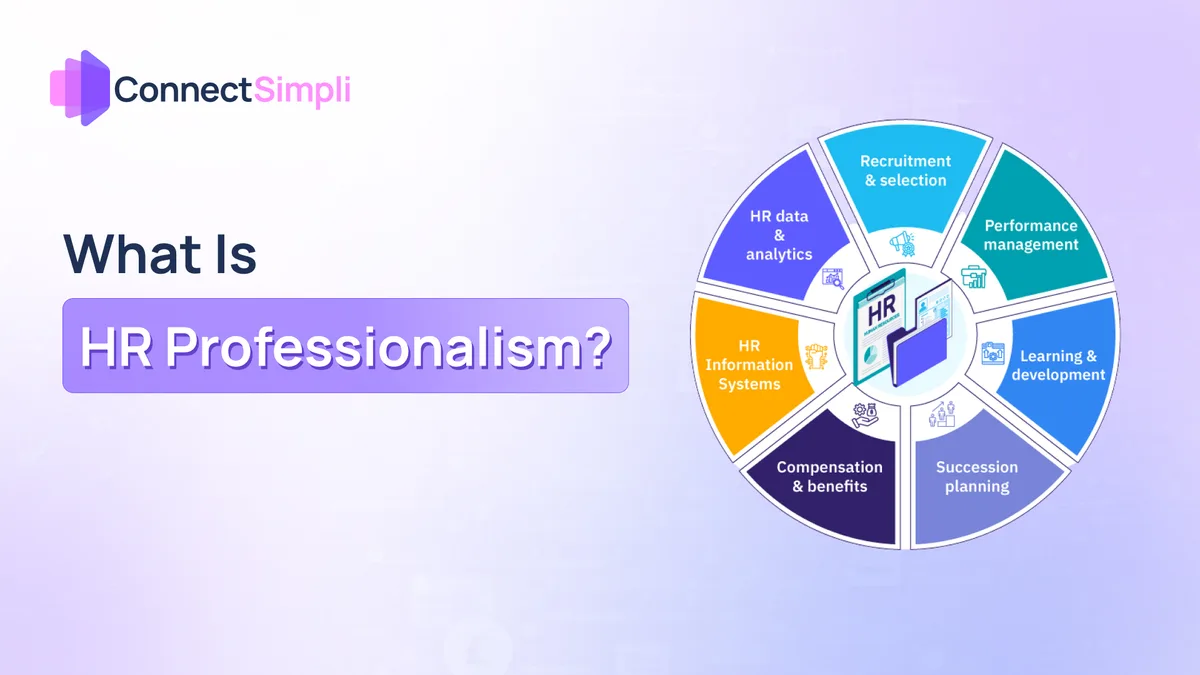
- Recruitment
- Payroll
- Employee records
- Performance management
- HR reporting
Professional Behaviour
This is how the HR professional performs those responsibilities.
For example:
- Handling information confidentially
- Communicating respectfully
- Treating employees fairly
- Being reliable
- Taking responsibility for mistakes
An HR professional needs both.
Someone may have excellent HR knowledge but still struggle if they don’t communicate properly or handle confidential information responsibly.
Common Examples of HR Professionalism
Here are a few simple examples.
Example 1: Employee Complaint
An employee approaches HR with a workplace concern.
A professional HR response would involve listening carefully, maintaining appropriate confidentiality, documenting relevant information, and following the organisation’s process.
Example 2: Sensitive Salary Information
An HR employee has access to salary information.
Professionalism means not casually discussing another employee’s compensation with colleagues who don’t have a legitimate reason to know it.
Example 3: Performance Issue
A manager asks HR for help with an employee’s performance.
A professional HR employee should focus on relevant facts, company processes, and constructive communication rather than personal opinions.
How Can Companies Encourage HR Professionalism?
Professionalism isn’t only an individual responsibility.
Businesses can also create an environment that supports professional HR practices.
This can include:
- Clear HR policies
- Defined roles and responsibilities
- Employee data access controls
- Structured HR processes
- Regular professional development
- Clear communication channels
- Consistent performance processes
Technology can support these processes, but company culture and leadership are equally important.
HR Professionalism in a Growing Business
As a company grows, HR professionalism becomes increasingly important.
A small business might manage employee information informally.
But once the workforce grows, informal processes can become difficult to manage.
More employees mean:
- More employee records
- More HR requests
- More documents
- More leave requests
- More performance discussions
A structured approach helps HR remain consistent as the organisation grows.
ConnectSimpli brings different workforce processes together through its HR platform, allowing businesses to manage employee information and related HR operations in a more organised way. Explore ConnectSimpli HR software in Pakistan.
Final Thoughts
So, what is HR professionalism?
HR professionalism is about much more than looking or sounding professional.
It means treating employees with respect, protecting confidential information, communicating clearly, remaining fair and objective, staying organised, and taking responsibility for your work.
The best HR professionals combine technical HR knowledge with strong professional behaviour.
They understand that every interaction with an employee can influence how that person views the organisation.
And ultimately, that’s what makes professionalism so important in HR.
FAQs About HR Professionalism
What is HR professionalism?
HR professionalism means demonstrating competence, integrity, confidentiality, fairness, respect, and responsibility when performing HR duties.
Why is professionalism important in HR?
HR professionals handle sensitive employee information and workplace situations, so professional behaviour is essential for maintaining employee trust.
What are the qualities of a professional HR employee?
Important qualities include communication, confidentiality, fairness, organisation, reliability, empathy, integrity, and continuous learning.
Is confidentiality part of HR professionalism?
Yes. HR professionals often handle sensitive employee information, so confidentiality is a fundamental part of professional HR behaviour.
How can HR professionals improve their professionalism?
They can improve by developing communication skills, learning continuously, protecting confidential information, staying organised, understanding HR policies, and practising fair and objective decision-making.